
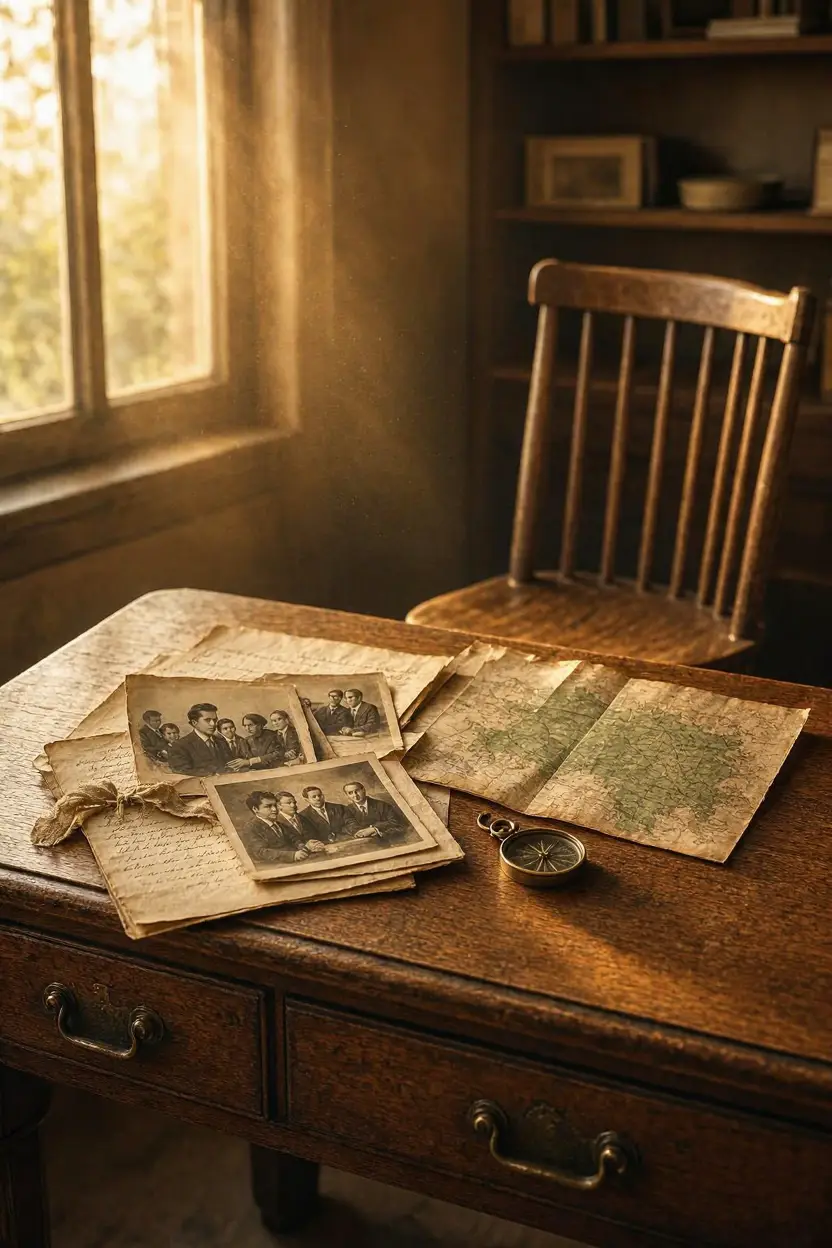
One of the family stories I grew up hearing was that three brothers immigrated from Ireland, but one of them went to Canada. It was repeated so often that it became accepted family history. Yet when I began researching, I found no evidence that the story was true.
What I did discover was something different.
There were relatives who remained in Ireland. Records, DNA matches, and family connections suggested that not everyone left. The details were not what the story claimed, but the story itself refused to disappear. That made me wonder: Why was it told in the first place?
Family stories are often treated as either true or false. Genealogists spend countless hours trying to verify names, dates, places, and relationships. We want to know whether a story actually happened.
But sometimes the more interesting question is this:
What was the story trying to explain?
When a particular tale survives for generations, it usually does so because it satisfies some emotional need. The facts may become distorted, but the feeling behind the story remains remarkably persistent.
In my family, the story suggested that someone was missing.
Perhaps the descendants of those who left Ireland felt a lingering connection to relatives they never knew. Maybe letters stopped arriving. Maybe communication faded over time. Perhaps family members wondered what became of the people left behind.
Over generations, those feelings could have evolved into a simpler explanation: one brother went somewhere else.
The story provided a narrative for absence.
I've seen similar patterns in many family histories. A "black sheep" ancestor may represent unresolved family conflict. A tale of wealth that was supposedly lost may reflect memories of hardship or changing fortunes. A story about noble ancestry may reveal a family's desire for dignity and belonging during difficult times.
The details can be wrong while the emotions remain accurate.
That doesn't mean we abandon the search for facts. Quite the opposite. Research allows us to separate the literal story from its deeper meaning. Once we know what actually happened, we can begin asking why the family remembered it differently.
Consider a family legend you have heard repeatedly. Instead of asking only, "Did this happen?" try asking:
- What problem was this story trying to solve?
- What fear, hope, loss, or longing does it express?
- Who benefited from telling it?
- What feelings were passed down along with the facts?
- If the story isn't literally true, what emotional truth might it contain?
Sometimes the answer is loneliness.
Sometimes it is grief.
Sometimes it is pride.
And sometimes it is the enduring sense that a part of the family is missing.
The stories we inherit are not always reliable guides to historical events. Yet they can be remarkably reliable guides to the emotions, values, and unanswered questions that shaped the generations before us.
That is why I believe family lore deserves our attention, even when the evidence leads us in another direction.
The goal is not simply to prove or disprove a story.
The goal is to understand what our ancestors were trying to remember.
Closing Reflection
The next time a family story falls apart under careful research, don't throw it away too quickly. Ask yourself what it might be revealing beneath the surface. The facts may change, but the human experience behind the story often remains. Sometimes the greatest discovery is not what happened, but why your family needed to tell the story at all.
0 Comments